Free shipping across India on orders above ₹499

The 92-Year Chronicle

Ninety-Two Years of Aroma, One Family Legacy

How a small shop on South Car Street in 1932 Tirunelveli became South India’s most revered stone-compounded hing house.

Est. 1932
3 Generations
100% Pure Resin
A 1930s South Indian spice shop

1932

Founding Year

92+

Years of Craft

9

Formulations

48,000+

Kitchens Served

Chapter I1932
The Genesis

The Little Shop on South Car Street

Near the sacred Thamirabarani river, young Shri P. Subramanian opened a modest stone-floored shop with two polished brass scales and an unyielding commitment to purity.

In the 1930s, finding raw asafoetida resin unadulterated by cheap gypsum was rare. Shri Subramanian forged direct links with overland merchants importing raw ferula gum tears.

Every morning before dawn, he hand-pounded the resin in stone mortars, balancing it with edible starches so even a tiny pinhead pinch would dissolve cleanly without burning in hot oil.

Word traveled swiftly. Temple cooks and neighbourhood families swore by the fragrant parcels from Subramanian's shop.

The very first formula created on those brass scales in 1932 remains the unbroken foundation of every jar we seal today.
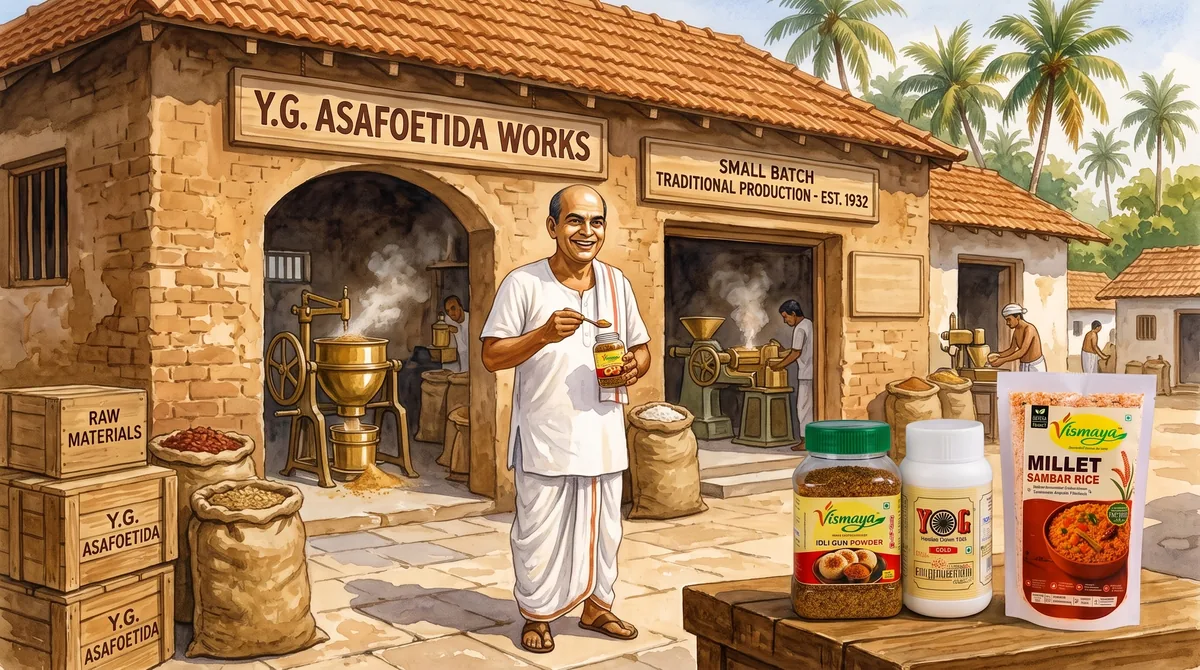
A 1930s Tirunelveli spice shop with brass scales and sacks of raw asafoetida resin
Chapter II1965
Culinary Formula

Tuning the Recipe to Sing in South Indian Kitchens

Subramanian's son realized that South Indian cooking demanded immediate, blooming heat without scorching.

South Indian kitchens thrive on blistering tadkas — crackling mustard in sesame oil and fiery tamarind vathal gravies. High-heat cooking destroyed ordinary hing.

By controlling stone-milling speeds, volatile aromatic terpenes were protected against heat degradation, creating our signature aroma bloom.

Stone-milled at low temperatures so essential aromatic oils remain intact until they touch your hot pan.

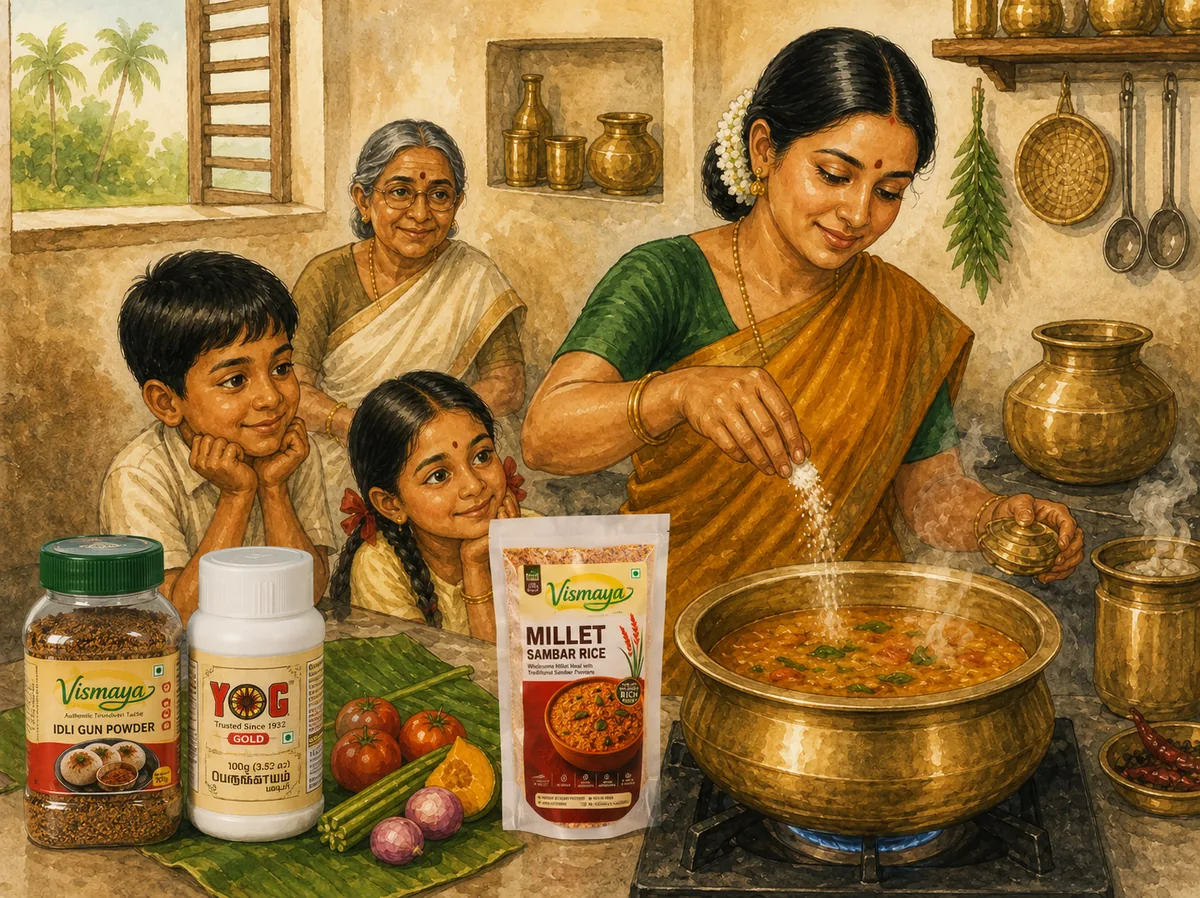
A traditional 1960s Tamil kitchen with a mother tempering sambar with pure hing
Chapter IIIToday
Modern Legacy

Third Generation, Same Uncompromising Integrity

Ninety-two years later, Shri Subramanian's grandchildren still oversee the works in Tirunelveli with modern FSSAI laboratory standards.

While tamper-evident seals and climate-controlled packing rooms have modernized the facility, every batch of resin is still organoleptically inspected by family elders before compounding.

Over 48,000 jars dispatch annually to kitchens across India and worldwide, including dedicated gluten-free lines and traditional roasted podis.

Over 48,000 jars delivered annually to passionate cooks who refuse to compromise on culinary truth.

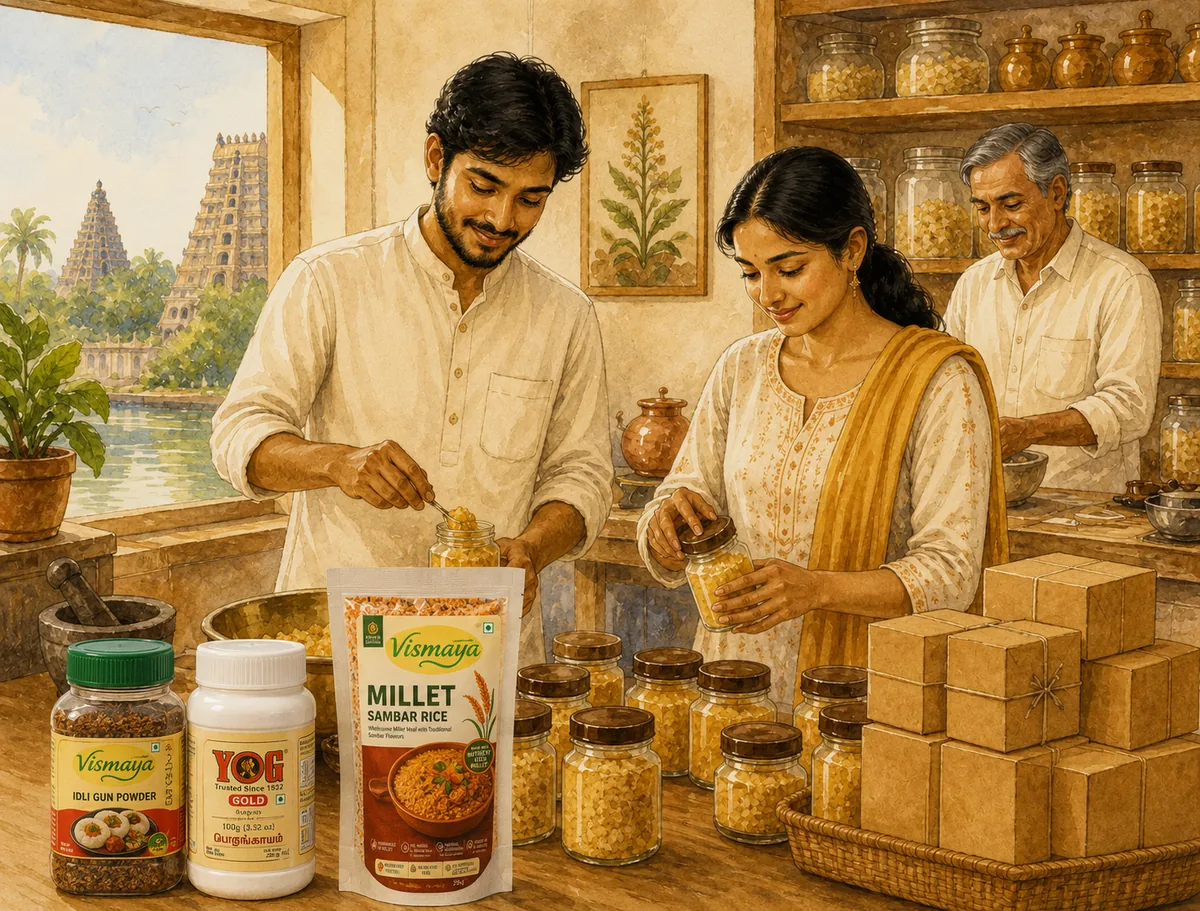
The third generation in Tirunelveli packing fresh jars with modern quality controls

The Method

The 4 Pillars of Stone-Compounding

Why Y.G asafoetida preserves its volatile aromatic oils.

01
01

Mountain Resin Sourcing

Grade-A tears of raw Ferula gum oleoresin harvested from alpine mountain roots.

02
02

Cold Stone Compounding

Resin is blended on heavy granite rollers at low RPMs to avoid heat build-up.

03
03

Texture Calibration

Milled into fine powders, coarse granules, pellets, or compressed into solid pindi cakes.

04
04

Aroma-Lock Sealing

Sealed immediately in airtight glass jars to lock in fresh fragrance.

Your Kitchen is the Next Chapter

Taste the True Tirunelveli Tradition

Explore our complete range of 9 stone-compounded powders, crunchy pellets, pure cakes, and gift boxes.